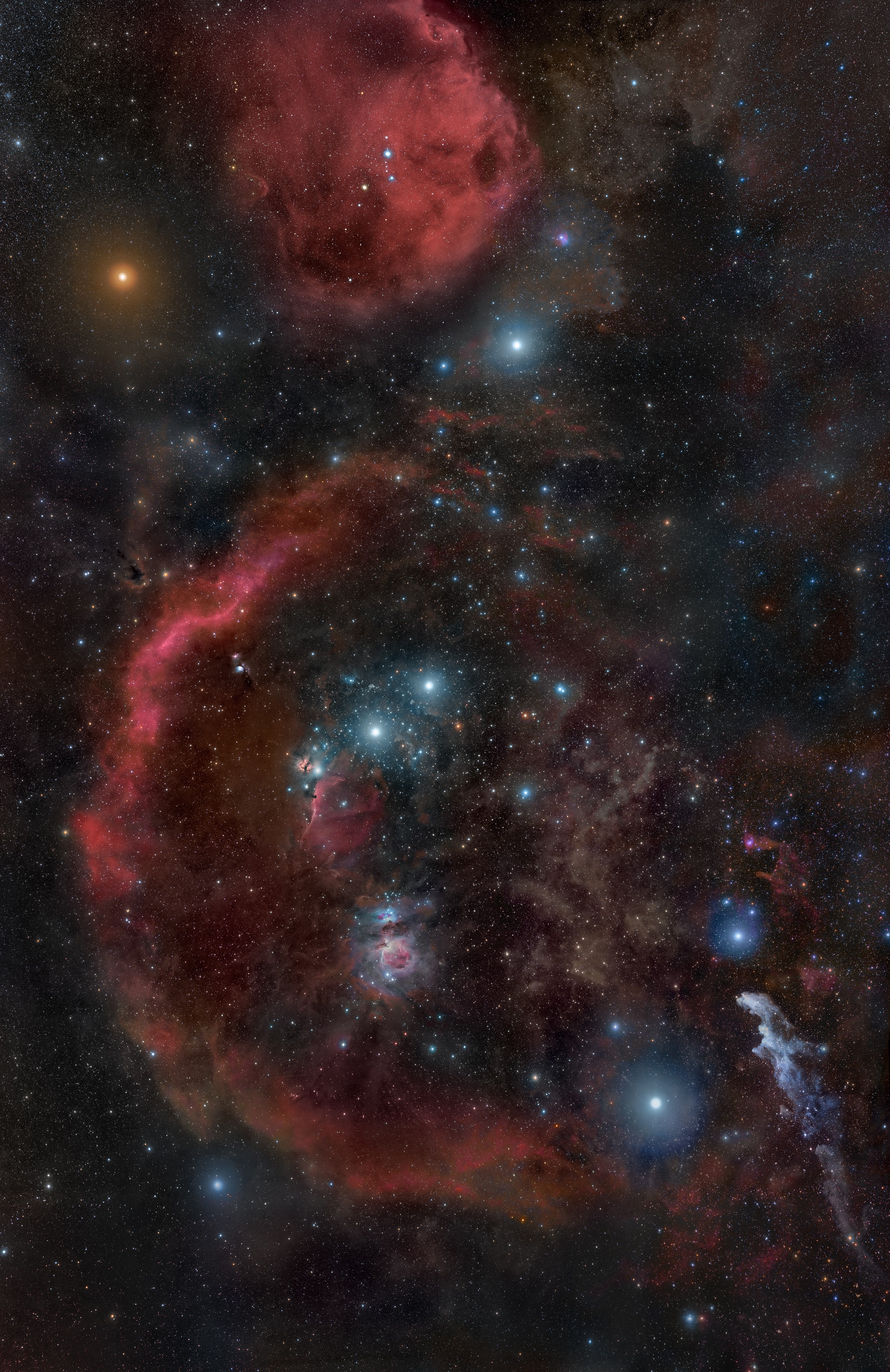
Reading the winter sky
Use Orion's Belt and the W of Cassiopeia to find your way around the cold-season sky and locate the Orion Nebula by eye.
Read the guideNorthern skies · Canada
Field-tested notes for observing constellations, planets and the aurora borealis from the dark country north of the city lights — written for naked-eye observers and binocular owners alike.

Stars above the boreal forest near Chisasibi, Quebec. Photo: Wikimedia Commons.
Observing guides
Each guide is built around what you can actually see with your eyes, a pair of binoculars, or a small telescope from a dark site in Canada.
Use Orion's Belt and the W of Cassiopeia to find your way around the cold-season sky and locate the Orion Nebula by eye.
Read the guide
How the RASC designates dark-sky sites, and which preserves from Jasper to Grasslands give the clearest view of the Milky Way.
Read the guide
Why the Northwest Territories sits under the auroral oval, when the two viewing seasons fall, and how to read a forecast.
Read the guideHow to read these notes
Every page is organised the same way: what to look for, where it sits in the sky, and what equipment helps. Star names follow common usage, with the formal designation noted once. Distances and magnitudes are given only where they are widely documented.
Dates and seasonal windows describe the Northern Hemisphere, with Canadian latitudes in mind. Where a figure could not be confirmed from a public source, the text simply describes the effect without inventing a number.
Get in touch
Send a note about an observing location, a constellation you are trying to find, or a correction to one of the guides. This form runs entirely in your browser and does not transmit your message to a server.
For official designations, programmes and current access rules, the Royal Astronomical Society of Canada and Parks Canada remain the primary public references.